I grew up believing thinking happened entirely inside the head.
If I just concentrated hard enough, clarity would eventually emerge.
But in my experience, that is rarely how good thinking works.
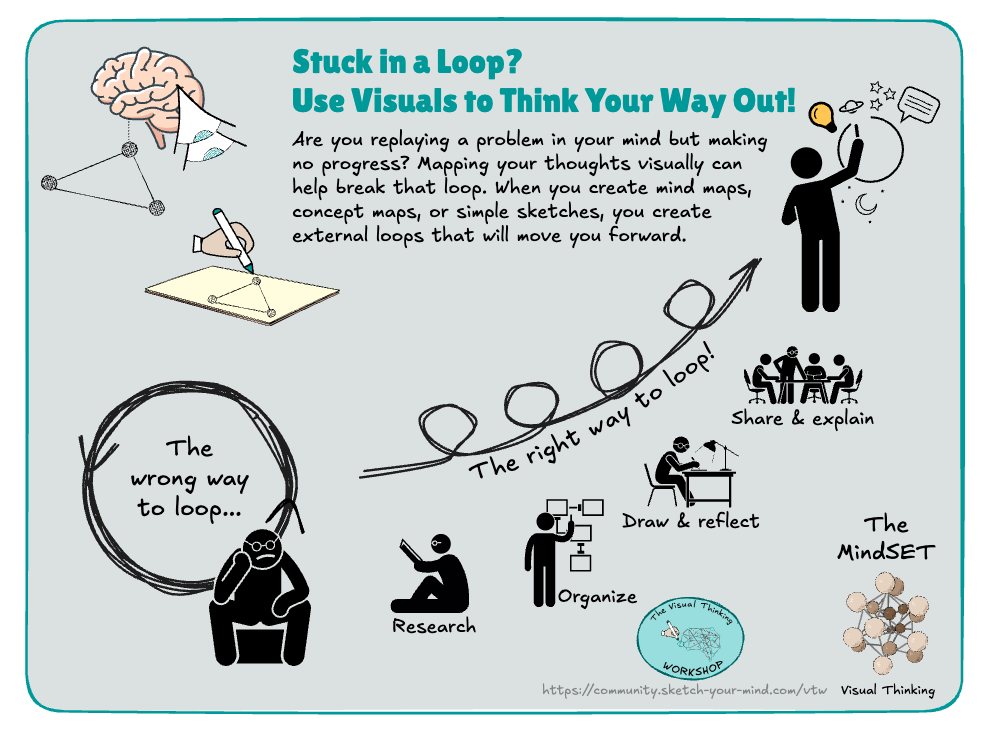
The biggest breakthroughs usually happen when thinking starts looping through external systems: sketches, gestures, conversations, diagrams, notes, questions, and explanations. Because once an idea leaves the mind and takes shape in the world, it becomes something we can interact with.
This connects closely to the ideas in The Extended Mind by Annie Murphy Paul. Based on expert research across cognitive science and psychology, thinking is not confined to the brain. We think through our environments, tools, bodies, and social interactions.
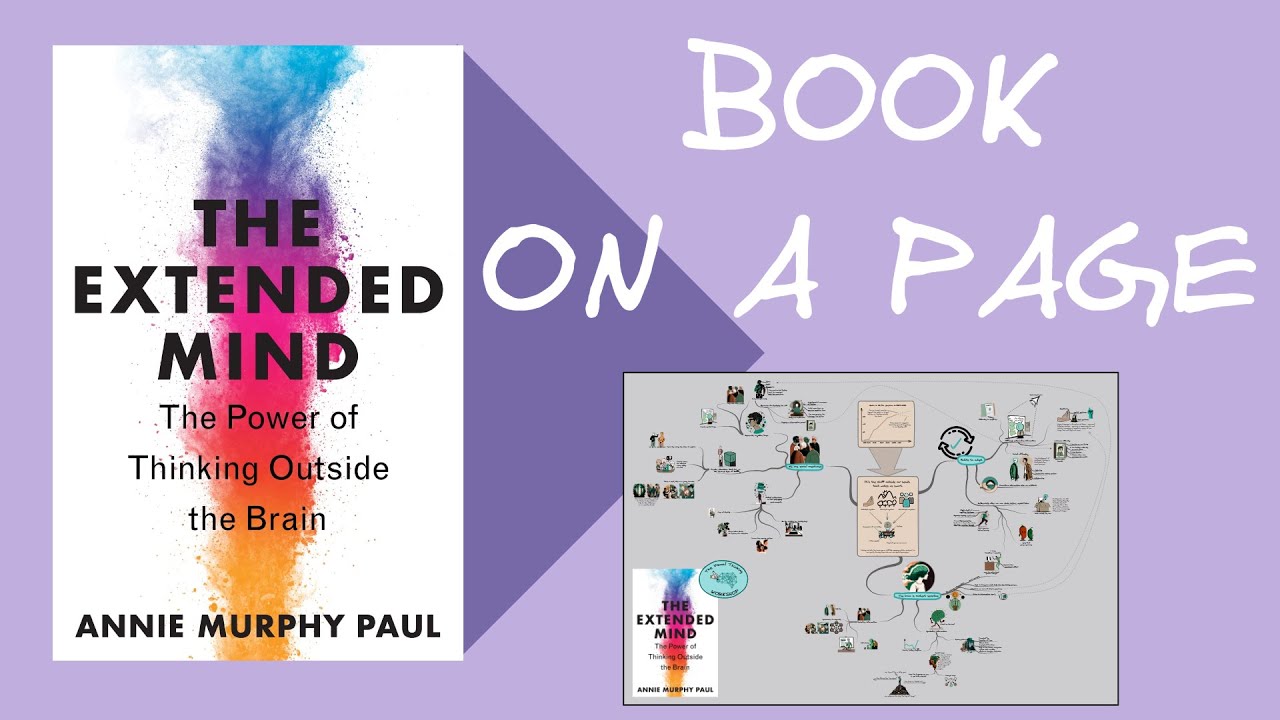
Transcript:: The Extended Mind - Book on a Page
See also::
- The Quest for The Extended Mind - An Experiment in Visual Storytelling (fantasy-style book summary)
- The Human Advantage - 28 Personas to Help You Think Better - A visual summary of The Extended Mind
That realization fundamentally changed how I approach learning, creativity, and problem-solving.
Instead of trying to “solve” ideas internally, I now try to create cognitive loops around them.
I research.
I organize fragments.
I sketch rough structures.
I step away.
I come back later.
I explain the idea to someone else.
I notice where the explanation breaks down.
I redraw it.
Each loop changes the thought.
However, not all loops are productive. Replaying the same thought internally without gaining new perspective burns energy, but often does not yield solutions. The mind keeps circling the same terrain because nothing external challenges the structure of the idea.
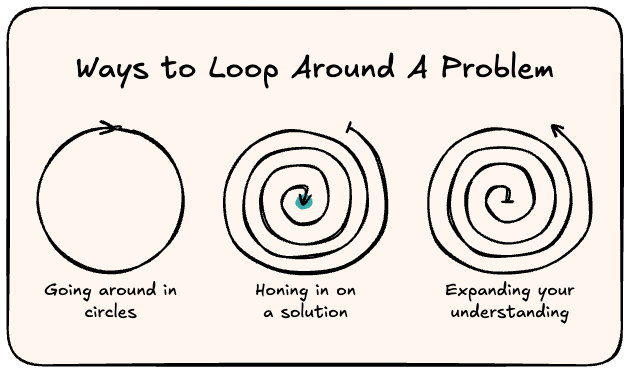
Visual thinking interrupts that cycle.
Yuri Malishenko describes visual thinking as a way of turning verbal, sequential information into external visual representations that support the brain’s thinking process. By drawing ideas as mental maps or diagrams, you can understand them faster, see flaws more easily, think more deeply, communicate better, and make the process more enjoyable.
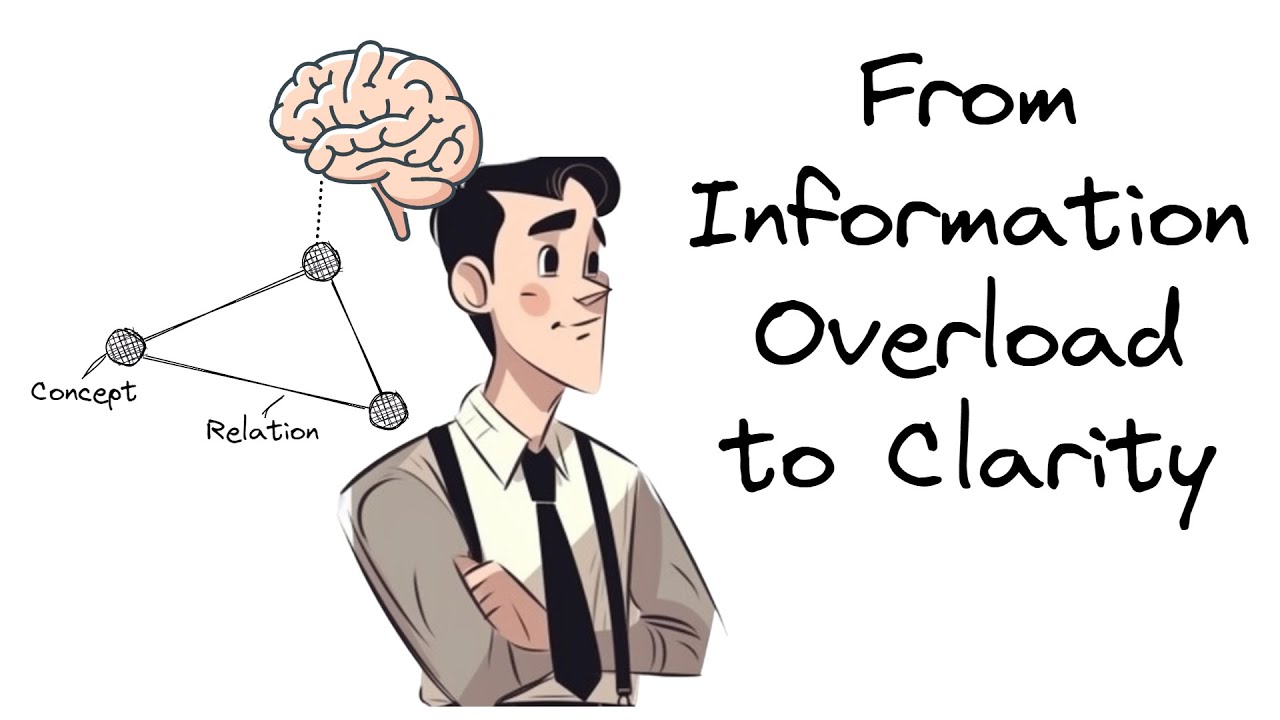
Transcript:: From Information Overload to Clarity: How Visual Thinking Can Help You Organize Your Thoughts
That is why even rough sketches can create disproportionate insight.
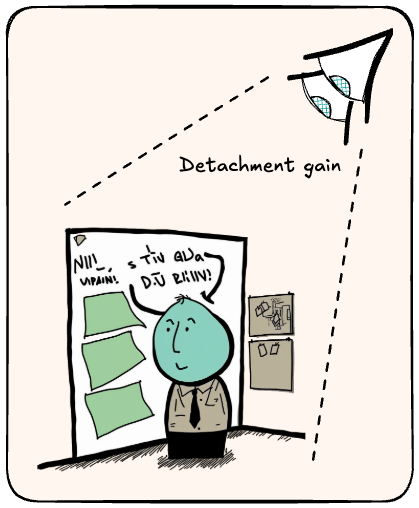
The value is not artistic quality. The value comes from creating detachment. Once a thought appears on paper, it is no longer fused with your identity or emotions. You can examine it more objectively. You can move pieces around. You can ask better questions.
But there is another type of loop that is easy to overlook.
Sometimes progress comes not from engaging more deeply with a problem, but from temporarily disengaging from it.
Rick Rubin describes this as skillful distraction: occupying the conscious mind so the unconscious mind can continue working in the background. Most of us have experienced this phenomenon. You struggle with a problem for hours, give up, go for a walk, wash the dishes, take a shower, and suddenly the solution appears.
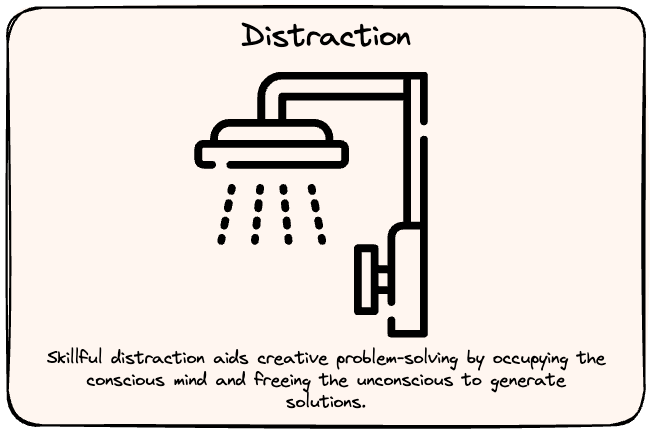
The breakthrough feels spontaneous, but it rarely is.
The unconscious mind has been looping around the question while your conscious attention was elsewhere. Simon Sinek and Elle Cordova talk about a similar idea in the A Bit of Optimism Podcast when they explore the role of boredom, which Sinek relabels as “Good nothing”.
In that sense, shower thoughts are another form of cognitive loop. You are still thinking, just not consciously. Stepping away from a problem is not abandoning it. Sometimes it is the most productive thing you can do.
And questions are loops too.
In my experience, some of the most valuable thinking happens not when I find answers, but when somebody asks a question that forces me to redraw the map entirely.
Because thinking is rarely linear.
Therefore, the goal is not to think harder. The goal is to build environments, practices, and feedback loops that help thinking evolve.
Practical Takeaways
The next time you feel stuck on an idea, resist the urge to spend another hour thinking about it internally.
Instead, create a new loop:
- Draw it. Even a messy sketch forces you to make implicit assumptions visible.
- Explain it. Try describing the idea to a colleague, friend, or even an AI assistant.
- Ask a question. “What am I assuming here?” is often more useful than searching for another answer.
- Change the medium. Move from text to a diagram, from a diagram to a conversation, or from a conversation to a concept map.
- Leave and return. Go for a walk, take a shower, do the dishes, exercise, or engage in another form of skillful distraction. Give your unconscious mind space to keep working.
- Seek another perspective. Experts, peers, and beginners all see different aspects of the same problem.
Whenever an idea feels stuck, don’t ask: How can I think harder?
Ask: What loop am I missing?
In a way, this blog post is yet another loop in my own thinking.
Now I’d like to make it part of yours.
How do you move an idea forward when you’re stuck?
Do you sketch? Journal? Walk? Discuss with others? Build concept maps? Ask AI? Teach the idea to someone else? Or do your best ideas arrive in the shower?
Share your favorite thinking loop in the comments. I’m particularly interested in practices that consistently help you gain a new perspective rather than simply going around in circles.